
How Solar Panels Work: A Guide for Commercial Businesses with Large Facilities
For businesses operating warehouses, manufacturing plants, distribution centres, retail parks, agricultural buildings, and other large commercial premises, energy costs can represent a significant portion of operating expenses. With rising electricity prices and increasing pressure to meet sustainability goals, many organisations are turning to solar power as a practical long term green solution.
But how exactly do solar panels work, and why are large commercial buildings particularly well suited to solar energy?
What Are Solar Panels?
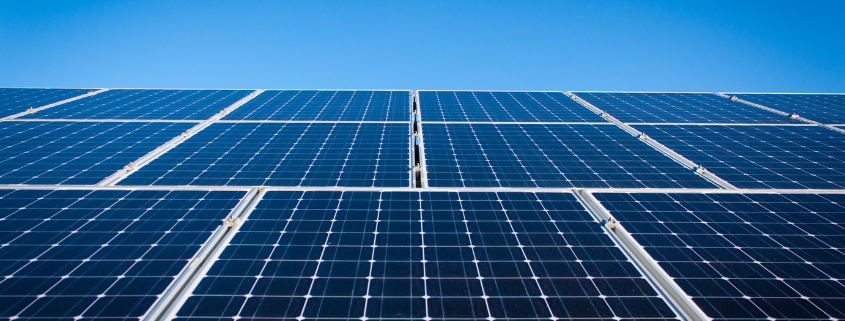
Solar panels are devices that convert sunlight into electricity. They are made up of photovoltaic (PV) cells, which capture energy from the sun and transform it into usable electrical power for your business. Commercial solar systems are typically installed on large flat or gently pitched roofs, making them ideal for businesses with substantial square footage.
The process of how solar panels generate electricity is surprisingly straightforward:
- Sunlight hits the solar panel – When sunlight reaches the photovoltaic cells inside a solar panel, it excites electrons within the semiconductor material (usually silicon).
- Electricity is created – the movement of these electrons generates direct current (DC) electricity.
- An inverter converts the power – because commercial buildings use alternating current (AC) electricity, the DC power produced by the panels passes through an inverter, which converts it into usable AC power.
- The building uses the electricity – the generated electricity can immediately power lighting, machinery, computers, refrigeration equipment and other operational needs
- Excess energy can be exported – if the system produces more electricity than the building requires, surplus energy can often be exported to the grid, creating an additional financial benefit depending on local regulations and energy agreements
Businesses with large roof areas have a unique advantage when considering solar power. A typical warehouse or industrial facility may have tens of thousands of square feet of unused roof space. This allows for significantly larger solar arrays than would be possible on residential properties, and the larger the installation, the greater the potential electricity generation and cost savings.
Commercial properties often consume substantial amounts of electricity during daylight hours which is the exact time solar panels are producing power. This means businesses can use a higher percentage of the electricity they generate, improving the financial return on the system.
Solar installations can help businesses:
- Reduce electricity bills
- Protect against future energy price increases
- Lower operational expenses
- Improve long-term budgeting certainty
Many customers, investors, and stakeholders now expect businesses to demonstrate environmental responsibility. Solar power helps organisations reduce carbon emissions while supporting Environmental, Social, and Governance (ESG) objectives.
The amount of energy generated depends on several factors:
- Available roof space
- Panel efficiency
- Building location
- Orientation and shading
- Local weather conditions
For example, a large warehouse with 50,000–100,000 square feet of roof space may be able to accommodate hundreds or even thousands of solar panels, generating a significant proportion of its annual electricity requirements.
Is solar power right for your business?
If your facility has extensive roof space and high electricity usage, solar energy could provide substantial long-term savings while helping achieve sustainability targets.
A professional solar assessment can determine:
- Available installation area
- Expected annual energy generation
- Potential cost savings
- Return on investment
- Carbon reduction impact
For many commercial property owners, the roof represents an underutilised asset that can be transformed into a source of clean, cost-effective energy.
As energy prices continue to fluctuate, commercial solar is increasingly becoming not just an environmental decision, but a strategic business investment as well as an environmental decision.
Interested in finding out how much your building could save with solar? Contact SQ4S today and discover the potential of your unused roof space.